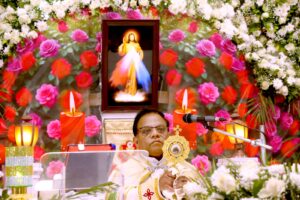
“Seeing with the Eyes of God”


This Sunday’s readings remind us of the importance of seeing the world through God’s eyes, not just our own limited perspective.

  1. God’s Perspective: Choosing the Heart Over the Appearance

In the First Reading from 1 Samuel, God tells the prophet Samuel not to judge by outward appearances, as people often do. Samuel is sent to anoint a new king for Israel, and though the first son he meets seems perfect, God chooses David, a young shepherd, instead. This teaches us that God looks at the heart, not external traits like power, beauty, or status. It’s a reminder that what God values most in us is not our appearance, but the sincerity and openness of our hearts to His will.

  1. The Light of Christ: A Call to Come Out of Darkness

In the Second Reading from Ephesians, St. Paul challenges us to live as “children of the light.” He urges us to walk away from darkness—sin, selfishness, and confusion—and embrace the light of Christ. During this Lenten season, we are called to reflect on how we live in this light. Are we shining with goodness and truth, or do we still allow the darkness of sin to cloud our vision?

  1. Healing the Blindness of Sin: The Miracle of Spiritual Sight

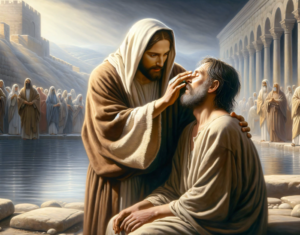
The Gospel of John presents the story of the blind man whom Jesus heals. The physical healing is profound, but there’s an even deeper message about spiritual sight. At first, the man doesn’t fully understand who Jesus is, but as he gains physical sight, his spiritual sight also grows. He comes to believe in Jesus as the Son of God. This progression from blindness to spiritual awakening mirrors our own journey in faith. Lent is a time for us to ask: Are we spiritually blind in any way? Are we open to allowing Jesus to open our eyes to His truth?

Reflection: Seeing with God’s Eyes

As we continue our Lenten journey, we are invited to ask ourselves: How do we see others and ourselves? Do we judge by external appearances, or do we look deeper, as God does, to see the heart? How often do we measure others by the world’s standards, missing the value and potential that God sees in them?

Lent is a time for self-examination and transformation. Let us open our hearts to God’s light, allowing Him to heal our blindness—both physical and spiritual. Just as the blind man came to see both physically and spiritually, may we also allow Jesus to reveal the deeper truths of our lives. May we walk in His light, becoming witnesses of His love and grace to those around us. Let this Lent be a season of renewed vision, where we see ourselves and others not by the standards of the world, but through the eyes of God—eyes filled with love, mercy, and compassion.

Closing Prayer: Lord Jesus, open our eyes to see the world as You see it. Help us to look beyond outward appearances and to recognize the hearts of those around us. Heal our blindness, both physical and spiritual, so that we may walk in Your light and become instruments of Your love in the world. We ask this through Christ, our Lord. Amen.

PARISH OFFICE ASSISTANT NEEDED


OFFICE ASSISTANT APPLICATION

Job Title: Office Assistant – Part-time
Reports to: Pastor

Job Summary:
A Catholic Parish Office Assistant provides administrative, clerical, and receptionist support to ensure smooth, professional church operations. Key duties include greeting visitors, answering phones, maintaining databases, preparing the weekly bulletin, managing calendars, and handling sacramental records. Ideal candidates are knowledgeable in Catholic faith, maintain high confidentiality, and possess strong communication skills.

Duties/Responsibilities:
Key Responsibilities
• Reception and Administration: Greeting visitors, answering, and routing phone calls, managing mail, and maintaining office supplies.
• Parish Records & Database: Managing parishioner registrations, updating records, entering sacramental data (baptism, marriage), and preparing certificates.
• Communications: Gathering information for the weekly parish bulletin, creating, and printing liturgical worship aids, and updating the parish website or calendar. Create binders for weekend liturgies, including Call to worship, announcements, Liturgical ministry schedules.
• Operational Support: Supporting ministry leaders, coordinating room scheduling, assisting with mailings, and assisting with offertory records.
• Secretarial / Organizational Duties: Entering Mass requests, taking minutes at Parish Pastoral Council and Finance Council Meetings, sending email reminders of upcoming meetings and disseminating minutes for councils to review. Organizing current filing system and creating a digital filing system. Creating Quarterly Liturgical Ministry Schedules.
• Confidentiality: Maintaining strict confidentiality regarding parish matters, parishioners, donors, and sensitive sacramental information.
• Other Duties: as assigned.
Job Requirements
• Faith Alignment: A practicing Catholic who understands and lives according to Church teachings is preferred.
• Technical Skills: Proficiency in Microsoft Office (Word, Excel), and experience with database software such as ParishStaq or similar.

• Communication & Organization: Excellent verbal/written communication skills and strong organizational abilities.
• Compliance: Ability to pass a criminal background check and complete diocesan safe environment training.
Required Skills/Abilities:
• Excellent verbal and written communication skills.
• Excellent interpersonal and customer service skills.
• Excellent organizational skills and attention to detail.
• Excellent time management skills with a proven ability to meet deadlines.
• Ability to think on your feet and adapt to changing conditions.
• Proficient with Microsoft Office Suite. ParishStaq experience a plus but not required.

Education and Experience:
• High school diploma: 3–5 years of general office experience is preferred.

Physical Requirements:
Prolonged periods of sitting at a desk and working on a computer.
Must be able to lift up to 20 pounds at times.

Totus Tuus is Back! Weeklong Summer Catholic Youth Program July 5th-10th

Sign up your child for Totus Tuus, popular weeklong summer program – This summer, St Peter Parish is excited to host Totus Tuus, a fun and faith-filled experience for children. Totus Tuus is a weeklong Catholic youth program dedicated to sharing the Gospel and promoting the Catholic faith through evangelization, catechesis, Christian witness, praying the Rosary, attending Mass, and praying at eucharistic adoration. The program inspires in young people a true longing for holiness, a deep desire for daily conversion, and an openness to their vocation.

Teams of missionaries, comprised of college-aged students and several diocesan seminarians, will travel to a different parish each week, hosting the five-day catechetical program for grades 1-12. The week is filled with faith, fun, and friendship. There are messy games and crazy skits, in addition to daily prayer, Eucharistic Adoration, learning the Sacraments, and going to Mass. The missionaries also provide a witness to being an authentic disciple of Christ. The popular program sees hundreds of children participate every year in the diocese.

Grades 1st-6th Monday July 6th- Friday July 10th
9:00AM-2:30PM Catholic Catechism through games, songs, skits, prayer and adoration. Bring Sack Lunch. Snack provided.

Grades 7th-12th Sunday July 5th- Thursday July 9th
6:30 PM-8:15PM Catholic Catechism through games, songs, skits, prayer and adoration. Snacks provided.

Cost: $40.00/family of 1-2 children & $80.00/family of 3+ children.

“Give me a drink.”

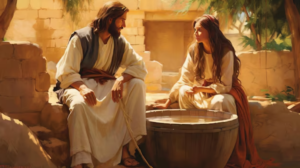
Dear brothers and sisters, On this Third Sunday of Lent, the Word of God places before us one of the most beautiful and transformative encounters in the Gospel: Jesus and the Samaritan woman at the well (John 4:5–42). At the heart of this story is a simple request from Jesus: “Give me a drink.” But beneath those words lies something much deeper — a revelation about thirst, about grace, and about the God who meets us exactly where we are.

  1. A God Who Waits for Us at the Well

The Gospel tells us that Jesus was tired from his journey. He sits at Jacob’s well at noon — the hottest part of the day. And there, he waits. He waits for a woman who comes alone, carrying not only a water jar, but also her past, her wounds, her complicated story. What is striking is this: Jesus begins the conversation. He crosses barriers — cultural, religious, moral. Jews did not associate with Samaritans. Men did not publicly converse with women in that way. Yet Jesus reaches out. This tells us something essential about our faith: God is not afraid of our history. He is not scandalized by our weaknesses. He meets us at our wells — the ordinary places of daily life — and begins the conversation. Lent is precisely that moment. Christ is waiting for us. Not to condemn, but to speak.

  1. Recognizing Our Thirst

At first, the woman thinks Jesus is talking about physical water. But he speaks of something deeper: “Whoever drinks the water I shall give will never thirst; the water I shall give will become in him a spring of water welling up to eternal life.” Every human heart is thirsty. We thirst for:

  • Love
  • Acceptance
  • Meaning
  • Peace
  • Security

Yet how often do we try to satisfy this thirst with things that cannot truly fill us? We look for living water in success, possessions, approval, distractions, or even unhealthy relationships. Like the woman who had five husbands, we move from one “well” to another, hoping this time it will satisfy. Lent invites us to ask honestly: Where am I trying to quench my thirst? What truly satisfies my soul? The Psalm today gives us the answer: “If today you hear his voice, harden not your hearts.” Our deepest thirst is for God — whether we recognize it or not.

  1. From Shame to Mission

As the conversation unfolds, Jesus gently reveals the truth about the woman’s life. He does not humiliate her. He does not accuse her harshly. He simply brings her into the light. And what happens? She leaves her water jar behind. That detail is powerful. The jar represents her old way of living — the reason she came to the well. Now she has found something greater. She runs back to the town and becomes a missionary: “Come see a man who told me everything I have done!” The woman who once avoided people now becomes a witness to Christ. That is what grace does. An encounter with Jesus changes shame into courage, isolation into communion, and sin into testimony. Lent is not about feeling guilty; it is about being transformed. It is about leaving the water jar behind.

  1. A Practical Lenten Invitation

So, what does this mean for us — practically — this week? First: Make time for the well. Prayer is where Jesus waits. Even 10–15 minutes of quiet each day can become the place of encounter. Second: Go to Confession. Like the Samaritan woman, allow Christ to speak truth into your life — not to condemn, but to free you. Third: Let go of what does not give life. Identify one habit, distraction, or attachment that keeps you spiritually thirsty — and surrender it. Fourth: Become a witness. Invite someone to Mass. Share a word of faith. Encourage a family member. When we encounter Christ, we cannot keep him to ourselves.

  1. Preparing for Easter

As we continue our journey toward Holy Week and Easter, today’s Gospel reminds us that Christianity is not first about rules — it is about relationship. Jesus does not start with a lecture. He starts with a request: “Give me a drink.” In a mysterious way, God thirsts for us. As Jesus will later cry from the Cross, “I thirst,” he reveals his longing for our love. This Lent, let us allow our thirst to meet his. Let us come honestly to the well. Let us leave behind what weighs us down. And let us discover again the living water that only Christ can give. May this Eucharist we celebrate today become that living water within us — a spring welling up to eternal life. Amen

“This is my beloved Son, with whom I am well pleased; listen to him.”


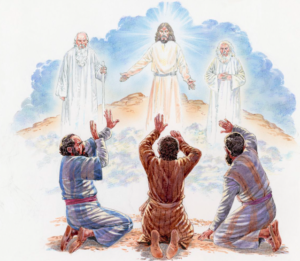
On this Second Sunday of Lent, the Church leads us up a high mountain with Jesus in the Gospel of the Transfiguration (Matthew 17:1–9). There, before Peter, James, and John, Jesus is transfigured — His face shining like the sun, His clothes dazzling white. Moses and Elijah appear beside Him, representing the Law and the Prophets. And then the voice of the Father declares: “This is my beloved Son, with whom I am well pleased; listen to him.”

Lent is our mountain journey.

In the first reading (Genesis 12:1–4a), Abraham is called to leave what is familiar and secure. “Go forth from your land… to a land that I will show you.” Abraham does not know the destination. He only knows the One who calls him. Lent asks something similar of us: to step away from what is comfortable — habits, distractions, even sins we have grown used to — and to trust that God is leading us somewhere better. The Transfiguration reminds us why this journey matters. The disciples see, just for a moment, who Jesus truly is. The glory that is usually hidden shines through. It strengthens them for what is to come — especially the scandal of the Cross. Before Good Friday, they are given a glimpse of Easter.

We, too, need that glimpse.

Our lives are often marked by burdens: family struggles, health concerns, uncertainty about the future. Faith does not remove these realities. But it changes how we carry them. The vision of Christ’s glory assures us that suffering and sacrifice do not have the final word. Transformation does. Peter wants to stay on the mountain: “Lord, it is good that we are here.” Who wouldn’t? We all cherish moments of clarity, peace, and spiritual consolation. Yet Jesus leads them back down the mountain — back to ordinary life, where healing, teaching, and ultimately the Cross await. Lent is not about escaping the world; it is about returning to it changed.

The Father’s command is simple: “Listen to him.”

This may be the heart of Lent. In a noisy world, filled with competing voices and constant distraction, are we truly listening to Christ? Through Scripture, prayer, the Eucharist, and the quiet movements of our conscience, He speaks. Do we make space to hear Him? This week, perhaps our Lenten practice can be shaped by that question. Take ten quiet minutes each day with the Gospel. Turn off the unnecessary noise. Fast not only from food, but from whatever keeps you from hearing the Lord clearly. Allow His light to reveal what needs to be transformed within you.

The same Jesus who shone with glory on the mountain walks with us now. If we follow Him through Lent — trusting like Abraham, listening like the disciples — we will not only witness His glory at Easter; we will share in it. May this holy season transfigure our hearts.

Fr. Varghese Puthussery SAC

Welcome Home Father Varghese!


My dear brothers and sisters in Christ,

Warm and heartfelt greetings to each of you!

After a month away in India for vacation and several important family and religious events, I am truly happy to be back home with you. I return with a grateful heart, beautiful memories, and renewed energy to continue serving you.

First and foremost, I want to thank all of you for your prayers, love, and constant support during my time away. Even from a distance, I felt spiritually united with you. Your prayers accompanied me throughout my travels and responsibilities, and I am deeply grateful.

I would like to express my sincere appreciation to Fr. Sergio for generously and faithfully taking care of the pastoral duties in my absence. His availability and dedication ensured that parish life continued smoothly.

I also want to offer my heartfelt thanks to our office staff, the members of the pastoral council and finance council, the leaders of our various parish communities, and all those who quietly and faithfully took care of the many needs of our parish during my absence. Your sense of responsibility, teamwork, and love for the Church are truly inspiring. Because of your commitment, our parish continued to grow and function beautifully. I am deeply grateful for each one of you.

My time in India was a precious blessing. I was able to spend meaningful time with my dearly beloved mother and my family members. One of my sisters, who is a religious nun, was also home for vacation, and another two sisters their families also came from Spain and Mumbai. Being reunited together after some time was a great joy and consolation.

I was especially blessed to baptize the daughter of my niece — a grace-filled and emotional moment for our family. I also had the privilege of blessing the marriages of two of my cousins. These sacred celebrations reminded me once again of the beauty of faith lived within families.

I participated in the platinum jubilee celebration of the presence of the Pallottines in India — a historic and grace-filled milestone of 75 years of missionary service. I also successfully completed my R1 visa extension process at the U.S. Embassy, which allows me to continue my ministry here without any concern. I thank God that everything went well.

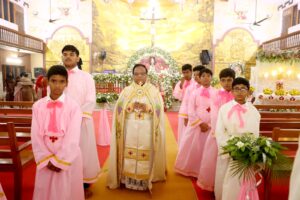
Another unforgettable moment was the feast of my home parish — a solemn joint celebration honoring Mother Mary, St. Sebastian, and St. Joseph, the patron of the parish. With nine days of novena followed by three days of vibrant celebration, it was a powerful witness of faith and devotion.

The days were filled with travel, visits, meetings, and many joyful reunions. They were beautiful, though quite full and demanding. Leaving my mother once again was not easy — it was heartbreaking for her and emotional for me. Yet I left with peace in my heart, knowing that I was returning to another family whom God has entrusted to my care.

I am back now — with you and for you — here in the United States. I come with renewed love, gratitude, and commitment to serve you wholeheartedly.

Thank you for being such a blessing in my life. Let us continue to walk together in faith, hope, and charity. May the Lord bless you and your families abundantly.

With affection, gratitude, and prayers,

Fr. Varghese Antony SAC

Away with you, Satan!


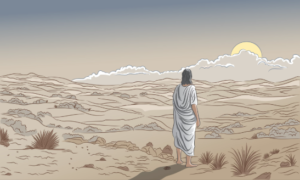
Every year, on the First Sunday of Lent the Church presents to us the Gospel of the temptation of Jesus in the desert, Matthew 4:1-11. In the Gospels of Matthew, Mark, and Luke, we hear how Jesus, after His baptism, was led by the Spirit into the wilderness for forty days. There He fasted, prayed, and faced temptation.

Why does the Church begin Lent with this scene? Because Lent is our desert experience.

The desert is a place of silence. A place where distractions are removed. A place where we encounter ourselves — and where we encounter God. But the desert is also a place of testing. Just as Jesus was tempted, we too experience temptation: the temptation to seek comfort over sacrifice, pleasure over discipline, power over humility, self over Go. Notice something important: Jesus does not avoid temptation. He faces it. And He overcomes it — not by argument, not by power, but by faithfulness to God’s Word. Let us ask ourselves today:

What is the “desert” I need to enter this Lent?

What temptation do I need God’s help to overcome?

What practical step will I take starting today?

Before Jesus began His public ministry, there was the desert. Before Easter joy, there is the Lenten journey. Yet we do not walk this path alone. The Spirit was with Jesus in the desert, and Christ walks with us today. If we embrace this season sincerely and prayerfully, Easter will not be just another celebration — it will be a personal experience of renewal and grace. May this holy season purify our hearts, strengthen our faith, and lead us to the joy of the Resurrection.

SDCCW 2026 Catholic Girl High School Graduate Scholarship

Springfield Deanery of Catholic Women Council (SDCCW) is pleased to award $2,000 scholarships to four 2026 Catholic Girl High School Graduates in the Springfield dioceses in IL who exemplify our SDCCW Catholic values of Leadership, Faith, and Service.
Please see the attached application and information sheet to apply. Deadline of application is April 15, 2026.


2026 SDCCW H S Girl Scholarship Letter to Graduate

2026 SDCCW HS Girl Scholarship Application

“Give thanks to the Lord, for He is good; His love endures forever.” — Psalm 118:1


Dear Brothers and Sisters

As we enter this season of Thanksgiving, my heart overflows with gratitude for each of you. You are a blessing to our parish family—through your presence, your faith, your prayers, and your love for God. Every family, every individual, every child, every elder, every visitor, and every returning Catholic is important, valued, and welcomed here.

I want to assure you that I am here as your shepherd, walking with you in faith, joy, and hope. My prayer and my mission is to make our parish a place where all feel at home, where the lonely find friendship, the hurting find comfort, and the seeker finds Christ. Our parish is strongest when we stand united in Christ. Let us resist divisive thoughts, instead, let us build one another up in love, faith, and mission.

As St. Paul reminds us, “Let us pursue what leads to peace and to building up one another.” (Romans 14:19) Together, we can create a parish that truly welcomes everyone and reflects the love of Jesus. May your homes be filled with joy, peace, and gratitude this Thanksgiving, and may our parish continue to grow as a community of disciples who live, serve, and love as one family in Christ.

With prayerful gratitude and blessing,


Fr. Varghese Puthussery SAC

Beyond the Masks: Rediscovering the True Spirit of “Halloween”

Beyond the Masks: Rediscovering the True Spirit of “Halloween”

Before the costumes and candy, Halloween was a night of holiness — a vigil of light before the Feast of All Saints. This year, let’s look beyond the shadows and reclaim its sacred meaning.

Each year, as October 31st approaches, our streets fill with costumes, candy, and carved pumpkins. For many, Halloween is a night of fun and fright — a time for spooky decorations and sweet treats. Yet few realize that this day has holy and ancient Christian roots. Behind the masks and marketing lies a story that calls us to rediscover the real meaning of Halloween and to celebrate it in a way that reflects its true spirit.

The Meaning of the Word: The name Halloween is actually a shortened form of “All Hallows’ Eve.” “Hallow” means holy or saint — as we say in the Lord’s Prayer, “Hallowed be Thy name.” “E’en” is an old term for evening. Put together, Halloween literally means “the evening of all the holy ones.” It is the vigil before one of the Church’s greatest feasts: All Saints’ Day on November 1st — the day we honor all the saints in heaven, both known and unknown.

The Origin of the Feast: From the early centuries of Christianity, believers have honored the memory of the martyrs and holy men and women who gave their lives for Christ. As their numbers grew, the Church set aside a single day to celebrate all who have reached heaven — the great family of the faithful who now live in God’s presence. By the eighth century, Pope Gregory III established November 1st as All Saints’ Day, and the evening before became known as All Hallows’ Eve. It was a time of prayer, reflection, and preparation — a vigil of hope before the great feast of light and glory.

How the Meaning Was Lost: Over time, as Christian Europe met different local customs and seasonal harvest traditions, some of the symbols of autumn and death became mixed with the Church’s holy vigil. In more recent times, especially in popular culture, Halloween has drifted far from its sacred roots. Instead of a night preparing to honor the saints, it often celebrates fear, darkness, and even things that mock the sacred. What began as a vigil of holiness has become for many a festival of horror — and, sadly, a highly commercialized one. The focus has shifted from honoring heaven’s glory to glorifying the eerie and grotesque.

A Call to Reclaim the Light: Yet this need not be the case. As Catholics, we are invited to reclaim Halloween and return to its true purpose — a time of joy, remembrance, and faith. Halloween, rightly understood, points us toward the victory of light over darkness, of life over death, of Christ over evil. We can restore the beauty of this feast by celebrating it in meaningful ways: Attend Mass or a vigil service for All Saints’ Day. Learn about and share stories of the saints, especially lesser-known ones. Host an All-Saints’ celebration where children can dress as their favorite saints or biblical figures. Pray for loved ones who have died, preparing also for All Souls’ Day on November 2nd. Light candles as symbols of Christ, the Light of the World, shining in the darkness. These practices remind us that Halloween is not about fear, but about faith — not about death’s power, but about the promise of eternal life.

Becoming Saints Ourselves: The true message of Halloween is one of hope. It calls us to remember that we are all made for heaven, and that sainthood is not reserved for a few — it is our universal call. As we honor the saints who have gone before us, we renew our own desire to follow their example of courage, charity, and holiness. So, this year, as pumpkins glow on porches and children laugh in the streets, let us also allow the light of faith to shine in our hearts. Let us celebrate All Hallows’ Eve as it was meant to be — a joyful vigil before the Feast of All Saints, a night when we look not into the shadows, but toward the radiant glory of God’s kingdom.

Fr. Varghese Puthussery SAC, St. Peter Church.